
Most long-term client/agency relationships don’t end because of one major failure.
More often, clients reach a point where they realize they’re spending more time managing the relationship than they used to. The relationship starts out great. The team is engaged; they ask good questions; they’re paying attention to the details, and you feel like your business matters.
Then things start to change.
The people who know your brand move on, and new faces show up. Work shifts to different teams, so more things need to be explained than they used to. Knowledge gets transferred, but not always completely.
At some point, you may find yourself wondering who’s actually working on your business today.
The changes are usually subtle at first; a deadline gets missed, a mistake slips through, or an issue that should have been caught earlier makes it further into the process. You start reviewing things more closely because you’re no longer as confident they’ll be caught somewhere else.
The work still gets done, but you’re spending more time managing it than you used to.
A Good Partnership Should Make Your Job Easier
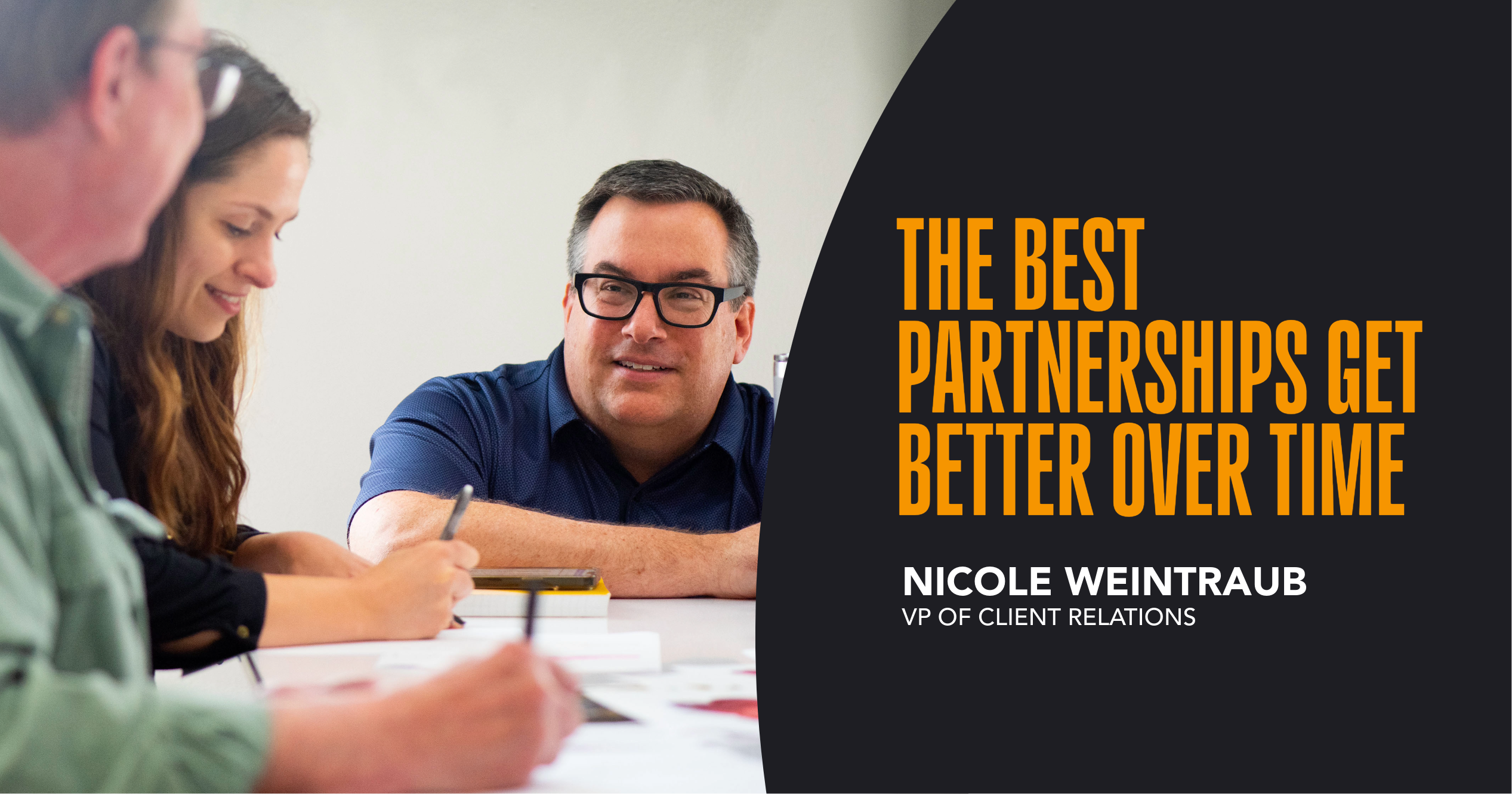
I’ve spent years working with brand, packaging, and operations teams, and I’ve come to believe that the best partnerships get stronger over time.
The longer a partner supports your business, the more value they should bring. They should understand your brand better. They should know your standards, your challenges, and the things that matter most to your team. They should be finding ways to reduce friction, not create more of it. Unfortunately, that’s not always how it works.
Too often, knowledge gets diluted through turnover, reorganizations, outsourcing, and constantly changing teams. Suddenly, the client is the person holding all the institutional knowledge.
That feels backwards.
A strong partner should do the opposite: the longer the relationship lasts, the more context it should accumulate, not lose.
You shouldn’t have to explain your brand from scratch every time someone new touches the work and have to wonder where your work is being done or whether the people touching your brand truly understand it. You should feel confident that the people supporting your business know what good looks like and care enough to protect it.
You should know that someone is paying attention.
Packaging Is Too Complex to Keep Starting Over
That continuity matters because packaging has become incredibly complex.
Most teams today are managing more products, more versions, more markets, more regulations, and more stakeholders than ever before. A change to one SKU can affect an entire product line. A production issue from six months ago can suddenly become relevant again. A decision made early in the process can create consequences much further downstream.
Packaging has a long memory.
The best partners do, too.
That’s why context matters so much. The best partners don’t just understand the project sitting in front of them. They remember what happened before and can see how today’s decisions might affect tomorrow’s work.
That knowledge is hard to build.
And it’s incredibly easy to lose.
Why Responsiveness Isn’t Enough
When people talk about great service, they often talk about responsiveness. And responsiveness matters but answering emails quickly isn’t the same thing as making a client’s life easier.
A team can be responsive and still leave the client responsible for connecting the dots, managing risk, checking quality, and making sure nothing gets missed.
What clients really need is stewardship.
To me, stewardship is taking responsibility for more than the task at hand. It’s noticing potential issues before they become problems. It’s remembering lessons from previous projects. It’s understanding the intent behind a request, not just following the instruction itself.
Sometimes it’s as simple as saying, “Before we move forward, have we thought about this?”
Most clients don’t necessarily ask for stewardship by name. What they ask for is fewer surprises, fewer mistakes, fewer missed deadlines, and fewer things they have to personally manage.
What they really want is a partner who’s paying attention.
The Best Partnerships Feel Different
As technology and AI continue to speed up packaging workflows, I actually think the human side of partnership becomes even more important.
Speed is valuable. But speed doesn’t replace accountability; it doesn’t replace experience, and it certainly doesn’t replace people who know your business well enough to spot issues before they become problems.
The strongest client relationships I’ve seen never feel transactional – they feel like an extension of the team. Knowledge builds instead of disappearing. Trust grows because people know the history. And the partner becomes more valuable because they understand not just what needs to get done, but why it matters.
That’s the real benefit of longevity.
Not simply knowing the business longer — but becoming better at supporting it because of everything you’ve learned along the way, and giving your client greater confidence in the work, the process, and the partnership.
At Olberding Brand Family, we’ve always believed that relationships create their greatest value over time. The longer we work with a brand, the better we should know it, the more responsibility we should take on, and the easier we should make life for the people we support.
Because the best partnerships shouldn’t wear out over time.
They should get better.